How a rhythm game mode inside Fortnite quietly rebuilt the infrastructure for music in games — and revived an entire genre along the way.
Before Fortnite Festival, music in Fortnite was an event. It was something that happened to you — a Travis Scott spectacle, a Marshmello moment, a Rift Tour you attended once and then talked about. These were incredible activations, but they were exactly that: activations. Temporary. Expensive. One-and-done. If you were an artist and you wanted to exist inside Fortnite, you needed the kind of deal that justified months of bespoke development for a 10-minute show.
Festival changed that equation entirely. And I don't think the industry has fully caught up to what it means.
I was Lead Producer on Fortnite Festival at Epic Games from its inception through launch and beyond. What I want to lay out here isn't a victory lap — it's my personal take (and based on publicly available information), on why Festival matters as a platform, not just a mode. (For absolute clarity, nothing in this piece reflects non-public information or the views of Epic Games.)
Surface Area
The fundamental problem with the pre-Festival approach to music in Fortnite was surface area. Before Festival, artists could enter the Fortnite ecosystem through two doors: a tentpole concert event (massive investment, massive reach, one-time) or cosmetic collaborations (Icon Series skins, emotes). Both were valuable, but both were narrow. A concert required the full resources of the live events pipeline. A cosmetic collaboration was, at the end of the day, a skin.
Festival created a third door - one I think is bigger than the previous two.
When Festival launched in December 2023, built by Harmonix (the team behind Rock Band and early Guitar Hero), it introduced Jam Tracks: purchasable songs that function as cosmetic items within the Fortnite ecosystem. That framing — songs as cosmetics — sounds simple, but the implications are enormous. Suddenly, an artist doesn't need a tentpole event to have a presence in Fortnite. They need a song. And that song doesn't just live in Festival mode. It lives everywhere.
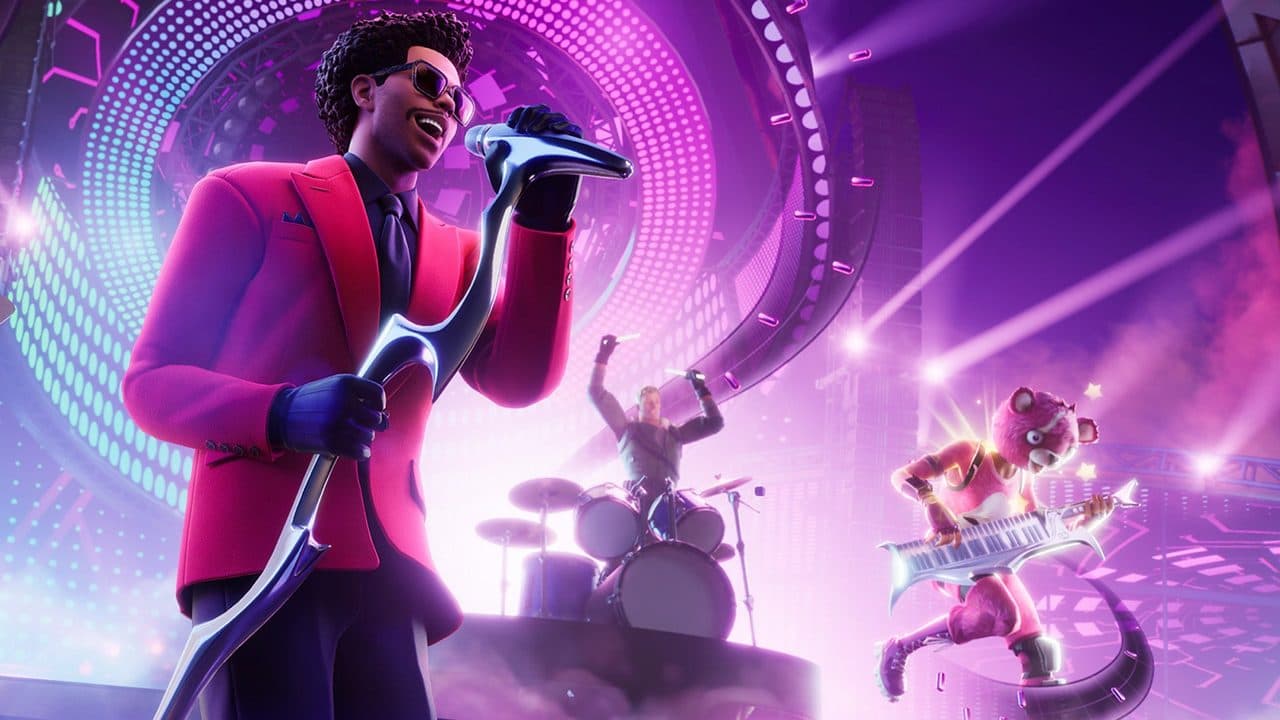
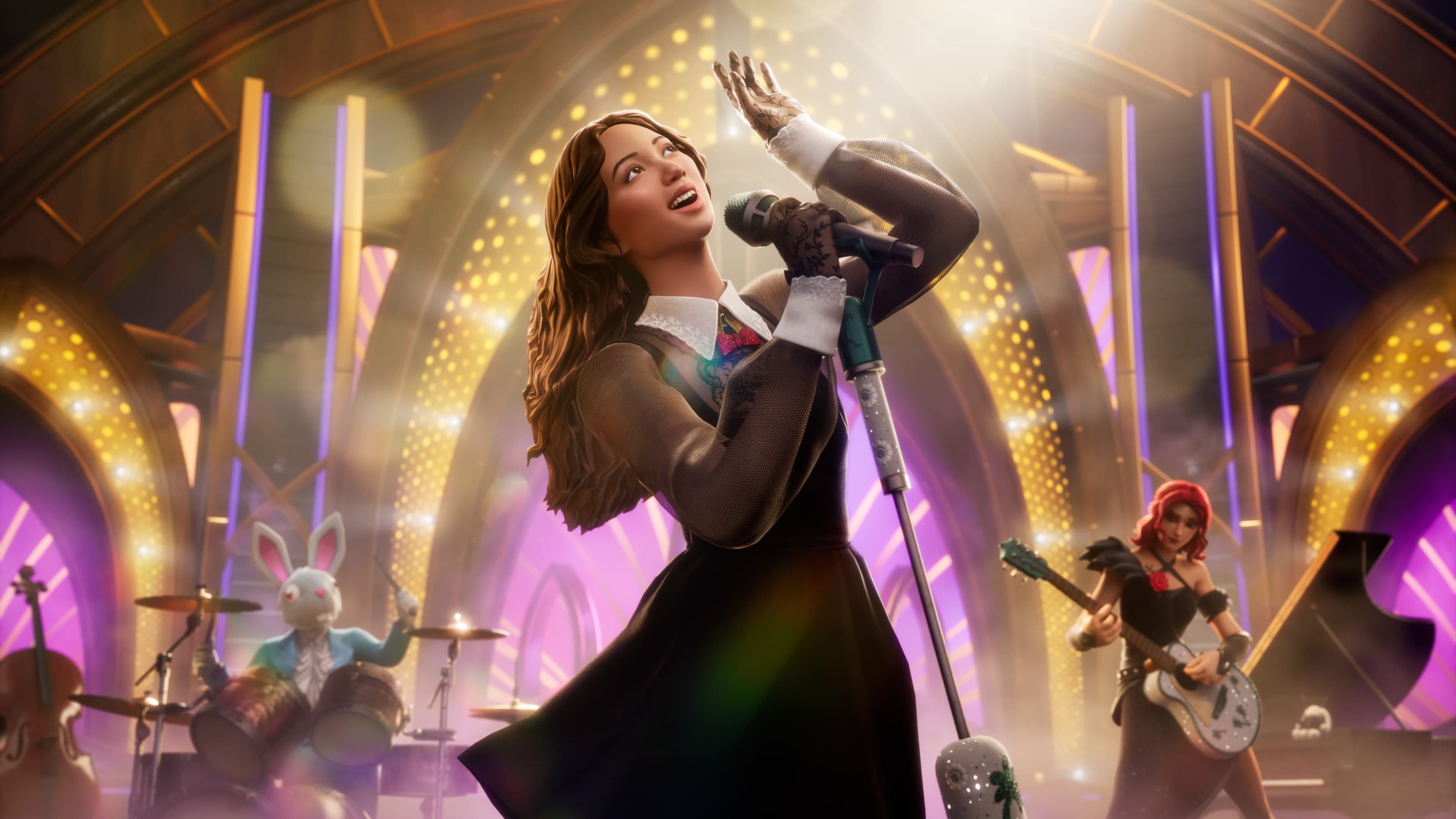
Each Fortnite season now features a Music Pass themed around a specific artist, with cosmetics, unlockables, and a curated setlist tied to their catalog. Artists like The Weeknd, Billie Eilish, BLACKPINK's LISA, and this seasons Icon, Laufey, have all integrated into the ecosystem through this model. It's not a one-weekend event. It's a persistent, seasonally refreshed presence that puts the artist's music in front of millions of players over weeks and months.
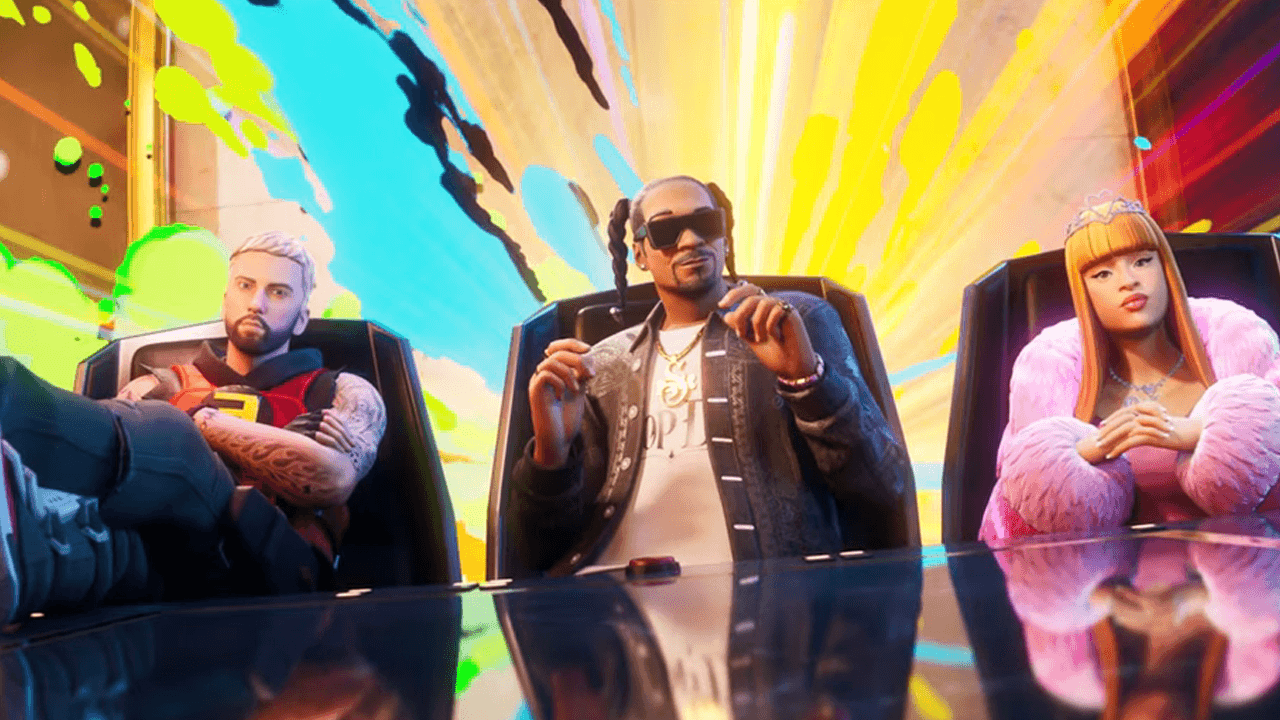
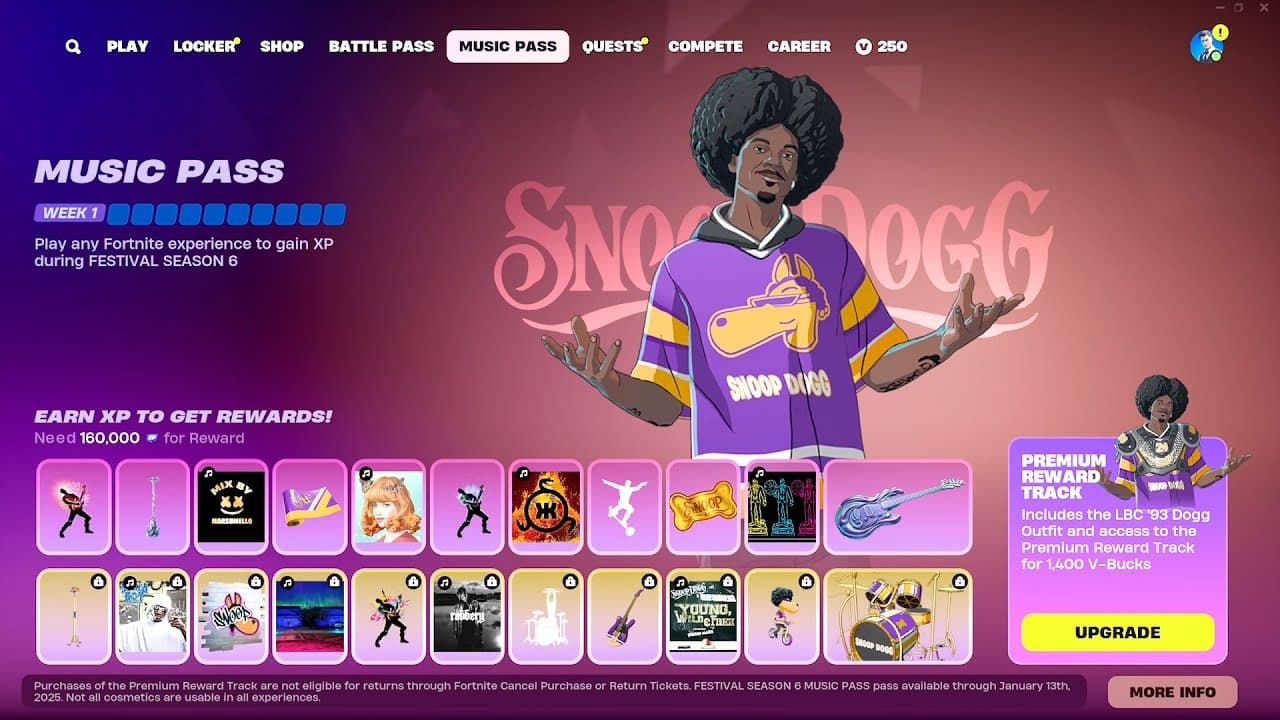
The Fortnite Remix season in November 2024 showed what this surface area model looks like at full scale. Snoop Dogg, Eminem, Ice Spice, and Juice WRLD didn't just get skins — they got POI takeovers on the Battle Royale map, boss encounters with Mythic weapons, and a month-long progressive rollout that built toward the record-breaking Remix: The Finale concert (14.34 million concurrent players). But crucially, Snoop Dogg was also the featured Icon for Fortnite Festival Season 6, with Jam Tracks from the Remix artists playable in the rhythm mode. The same artists who were transforming the Battle Royale map were simultaneously living inside the Festival ecosystem — their music playable, purchasable, and woven into players' daily routines. That's not a collaboration with a single touchpoint. That's an artist existing across every layer of the game at once. Festival is the infrastructure that makes that kind of multi-surface integration possible.
This is what I mean by surface area. Festival took the artist integration model from "one door, very expensive, very temporary" to "continuous, scalable, and woven into the fabric of the game."
The Rhythm Action Revival Nobody Predicted
I'll be honest — when we were building Festival, I personally hoped it would reignite interest in the rhythm action genre. I didn't expect the speed or the breadth of what actually happened in the market.
The rhythm game genre had been dormant since the late 2000s, when Guitar Hero and Rock Band oversaturated the market and the peripheral business collapsed. For nearly seven years, no major manufacturer produced a new instrument controller. The genre that had once generated billions in annual revenue was, for all practical purposes, dead.
Festival changed that inside of a year.
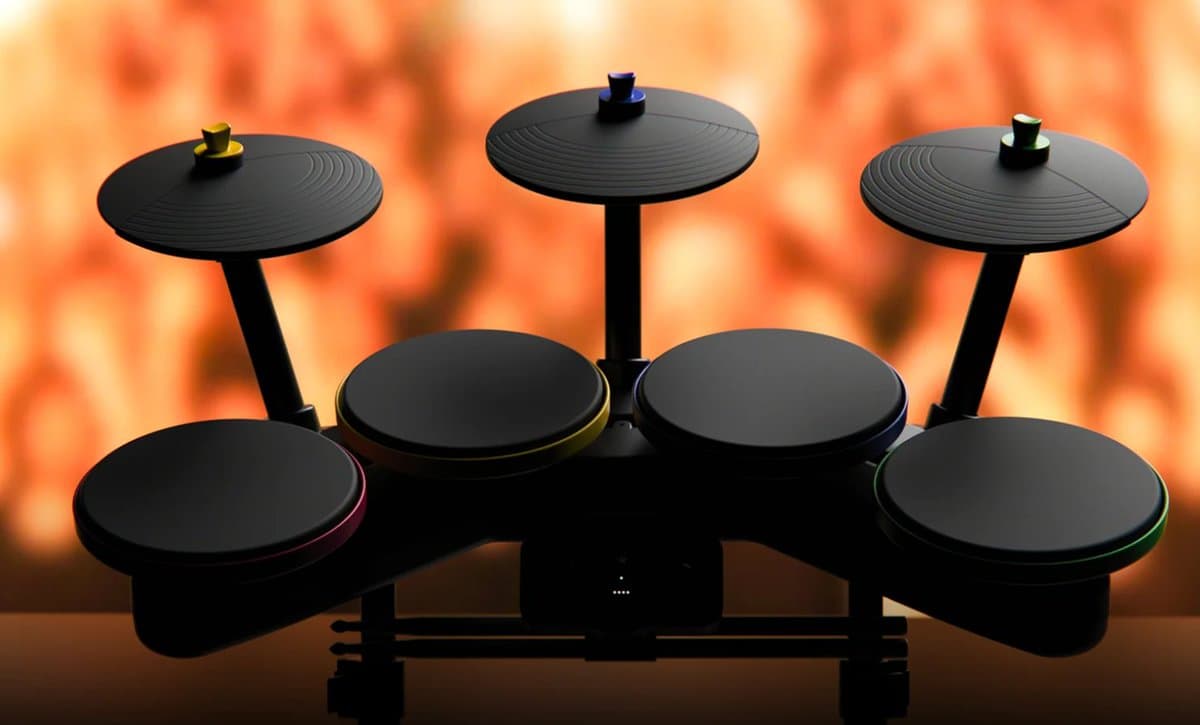
PDP shipped the Riffmaster guitar controller in April 2024 — the first officially licensed instrument controller for modern consoles in seven years. CRKD partnered with Gibson to produce Les Paul-inspired guitar controllers with mechanical fret buttons and Hall Effect strum bars, shipping in 2025. CRKD has since announced a drum kit controller for 2026. These aren't nostalgia plays. These are new hardware investments from companies betting real money that the rhythm game audience is back — and that it's going to grow.
Critically, these controllers aren't just Fortnite Festival peripherals. CRKD's Gibson controllers ship with a multi-platform mode dial supporting Festival, Rock Band, Guitar Hero, and Clone Hero across PlayStation, Xbox, PC, and Nintendo Switch. The cross-compatibility is the tell: manufacturers aren't building hardware for one game. They're building hardware for a revived genre. Festival didn't just create a market for its own peripherals. It raised the tide for every rhythm game in the space.
Variety ran the headline "Fortnite Revives Rock Band." Billboard covered the launch as the return of the music game. But the real validation isn't the press — it's the manufacturing decisions. Companies don't tool up production lines for instrument controllers unless they see sustained demand. That demand exists because Festival proved there's still a massive audience that wants to play music, not just listen to it.
Perhaps the most telling signal is what's happening in the indie space. Stage Tour — a new rhythm-action game from RedOctane Games, the studio behind the original Guitar Hero — is targeting a Fall 2026 release on PC and console, with full band support, dedicated peripheral compatibility, and partnerships with Gibson, Epiphone, Kramer, and Mesa Boogie. RedOctane helped create the genre the first time around. The fact that they're back, making a new bet on it, tells you something about where the market is heading. Festival didn't just revive demand for itself. It created the conditions for an entirely new generation of rhythm games to come to market.
Music Everywhere
If Festival was just a rhythm game mode, it would be notable but narrow. What makes it transformative is Jam Tracks — and how they turned purchased music into a system that touches every corner of Fortnite.
Here's what Jam Tracks actually do once they're in your locker. In Festival, obviously, they're the songs you play. But beyond that mode, Jam Tracks power a whole constellation of music features across the Fortnite ecosystem.
Beat-synced emotes let your character dance in perfect time with whatever Jam Track is playing — not a canned animation loop, but movement that actually synchronizes to the tempo and feel of the song. When you hit a beat-synced emote in a Battle Royale lobby or on a Creative island, other players can see and sync with it. Music becomes a social gesture, a way of expressing yourself in the same space where you're building walls and taking fights.
The Jam Track Player takes this further. You can now blast your owned Jam Tracks as a custom soundtrack during Battle Royale matches — background music you chose, from a library you built, playing while you play. And the Music Moments feature lets you assign specific Jam Tracks to key gameplay events: your intro music when jumping from the Battle Bus, your celebration music when you earn a Victory Royale.
This is what I mean when I talk about music living in the ecosystem rather than living in an event. When a player buys a Jam Track, they're not buying a song they'll hear once. They're buying a piece of their identity inside the game — something that shows up in their emotes, their matches, their victory moments, and their Festival performances. The artist who created that track isn't a guest in Fortnite. They're part of the furniture.
The Band in a Box — Rebuilt
For those of us who grew up on Rock Band, there's something deeply satisfying about what Festival has done with the classic "band in a box" format. Four instruments. A lobby (or living room) full of friends. The fantasy of being in a band without the years of practice.
Festival launched with lead guitar, bass, vocals, and drums on standard controllers. Pro Lead and Pro Bass arrived with update v30.00, adding more accurate charting for players who want the challenge of hitting real arrangements rather than simplified patterns. These pro modes support keyboard and mouse, standard controllers, and dedicated guitar peripherals — meeting players wherever they are in terms of both skill and hardware.
The band is now complete. Mic Vocals (Pro Vocals) and Pro Drums have both shipped, bringing a massive number of charts and difficulties to every instrument in the lineup.
Pro Drums supports electronic drum kits via MIDI, meaning players with existing E-kits can plug in gear they already own and play along to real drum parts. CRKD's publicly announced 2026 drum controller is timed to this rollout, but the MIDI support means you're not locked into any single manufacturer's hardware. If you've got a Roland or an Alesis kit in your garage, it works.
On the vocal side, the accessibility story is one of the best things about the implementation. Modern console controllers — the PS5 DualSense in particular — ship with built-in microphones. A dedicated USB mic will always be the better experience for serious players, but the fact that millions of players already own a microphone without knowing it is an entry-point advantage the original Rock Band, with its $170 band-in-a-box bundles and dedicated peripherals, never had.
The broader MIDI support is the quiet revolution. By embracing MIDI as an input standard rather than locking players into proprietary controllers, Festival opens itself to the entire existing ecosystem of music hardware — keyboards, drum pads, electronic kits, wind controllers. People will be able to invent new ways to play these charts, whether it be Fred Again.. style finger drumming on an MPC, or silly riffs on Trombone Champ with MIDI wind controllers. It's an invitation to real musicians as much as casual players, and that spectrum is exactly what made Rock Band special in its prime. Festival goes further, because the hardware ecosystem it's building on is independent of the game, and could become orders of magnitude larger than anything that existed in 2007.
What This Adds Up To
Fortnite Festival didn't just add a rhythm game to Fortnite. It built the connective tissue between music and gameplay that turns Fortnite into a genuine music platform — one where artists have persistent presence, where purchased music has utility across every mode, where fans express their taste through play, and where an entire peripheral ecosystem is growing to support deeper engagement.
The concerts will continue. The tentpole moments will still matter. But Festival is the infrastructure that makes music in Fortnite sustainable, scalable, and deeply personal in a way that a 10-minute spectacle never could be. It's the reason an artist can have a home in Fortnite, and along with UEFN, can connect across the ecosystem in deeply personal ways.
Fortnite is not just a stage. It is a place where music matters and connections happen.
(Don't worry, I'll talk about virtual concerts in my next article - Attack of the 40ft Artist!)
JP Kellams is the founder of Synaesthesia, a consultancy focused on the convergence of gaming and music. Previously, he was Lead Producer on Fortnite Festival at Epic Games. He has spoken at GDC, CEDEC, and the Amsterdam Dance Event on topics ranging from team leadership to the future of live music in interactive spaces.